
This buying guide helps you choose an induction cooktop by checking three things first: your cookware, the available space and power, and the way you actually use your burners. Induction responds quickly when you change the setting because it heats compatible cookware directly. That can make it easier to bring a pot to a boil and then turn it down. A hot pan can still heat the glass, so pay attention to the residual-heat indicator after cooking.
How to choose an induction cooktop that fits
For a built-in replacement, measure the actual countertop opening and the usable space below it, including drawers and any oven. Compare those measurements with the cutout and clearance diagram for the exact model. Have a qualified installer confirm the available supply and the maker’s installation requirements.
For a rental or occasional hot-pot meal, a plug-in single zone keeps the commitment low. Read the input rating and outlet instructions first, especially if a microwave or toaster oven already uses the same kitchen circuit. For your main cooktop, decide how many pans must work at once. The installation guide should tell your installer which supply the unit accepts and how much clearance it requires. If you’re leaving gas, get the electrical and countertop work priced before comparing appliance prices.
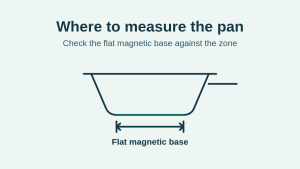
Test the flat bottom of your most-used pans with a magnet. A strong attraction is a useful first check, but the pan base still needs to fall within the cooktop’s supported diameter range. Measure the base that touches the glass rather than the rim. A small saucepan can be induction-compatible and still fall below a large zone’s detection minimum. See ENERGY STAR’s guidance on electric cooking for more on cookware and appliance formats.
Check the magnetic base, not the rim
A pan marked induction-ready can still heat unevenly if the magnetic area is much smaller than the pan’s cooking surface. For your widest skillet, check the size of the flat magnetic area and match it to a suitable zone. For a small moka pot or butter warmer, check the minimum pan size first. GE Appliances’ cookware guidance explains why base size and shape affect detection and heating.
What to look for in the specifications
| Criterion | Why it matters | What to verify |
|---|---|---|
| Zone layout | Determines whether everyday pans fit together | Check zone spacing and supported pan-base sizes against the pans you use at the same time. |
| Power sharing | Affects simultaneous high-heat cooking | Look for limits on paired zones and restrictions on boost in the manual. |
| Low-heat controls | Helps with gentle simmering and melting | Check how the manual describes low settings and whether individual zones have direct controls. |
| Bridge or flex zone | Makes room for suitable long cookware | Look up eligible zones and approved pan dimensions. A bridge does not guarantee uniform heat across every griddle. |
| Cleaning and ventilation | Affect daily use and placement | Check glass-care instructions, fan clearance, and your kitchen’s ventilation setup. |
Match the layout to a meal you cook often
If you boil pasta while simmering sauce, use your stockpot and smallest saucepan to check the zone map. Look for a combination that leaves room between handles and lets the stockpot heat quickly without forcing the sauce pan off a suitable zone. If you often make pancakes, verify the griddle’s magnetic base and dimensions against the bridge instructions. Browse Benzafind’s Ranges, Cooktops & Ovens section to see how these layouts are described on actual appliances.
Check how low settings and timers behave
If you mostly melt chocolate or hold sauces, find out whether low power is delivered in noticeable pulses. A quick boil demonstration tells you little about that behavior. If possible, watch a demonstration with a small saucepan at the lowest settings. Also check whether you can adjust each zone directly and what the timer actually does. An alert can remind you to check a pan, while a zone shutoff timer can stop heating on that zone if the model supports it.
Common buying mistakes
- Shopping by nominal width and overlooking the countertop opening, under-counter clearance, or electrical requirements.
- Assuming the biggest printed ring will recognize your smallest pan.
- Treating peak boost power as a level available on every zone at once.
- Leaving cookware replacement or installation work out of the total cost.
Checklist before you buy
- Decide whether the cooktop will be your main cooking surface or an extra burner.
- Measure the opening, space below it, and the bases of the pans you use most.
- Read the exact model’s installation and cookware instructions.
- Check zone spacing, minimum pan size, and any shared-power limits.
- Budget for cookware, installation, and any countertop or electrical changes.